I’ve decided to dig a pond. There is life waiting to be born. But with ponds come liners, and though many claim that any pond is better than no pond, there’s something about a plastic-lined pond that feels deeply disordered–so much so that I’m not certain I agree that any pond is better than none. Plastic doesn’t belong in the garden at all. Burying hundreds of pounds of it deep in the ground feels especially counterproductive.
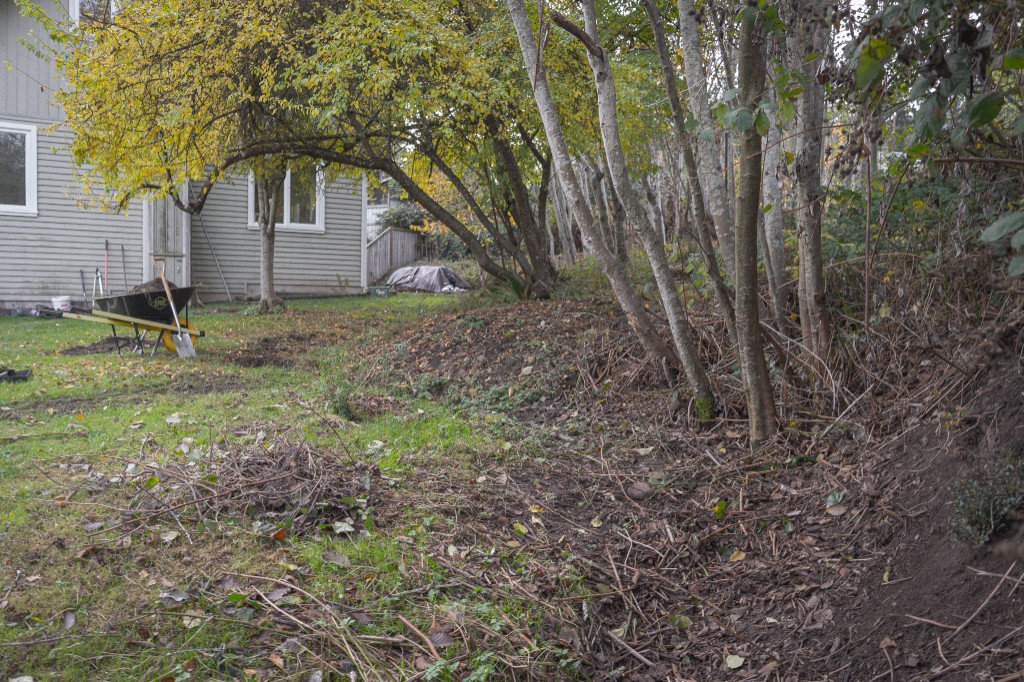
It’s not just the microplastics. It’s not just the fact that all it takes is the tiniest of holes for it to stop working entirely. It’s not just the blighted appearance of neoprene sticking out the sides of the pond in the dry months.
More than any of those things, it’s that what we’re doing in the garden is supposed to be expanding the equilibrium of life, and it’s hard for a mat at the bottom of a crater to feel like anything more than a glorified fish tank.
Wendell Berry reminded us that life is not supposed to have edges. It’s supposed to have margins. There is not supposed to be a hard boundary between water and soil. The soil under the water is not supposed to suffer and become bone dry (and ironically, entirely incapable of holding water), with its access to rainwater sealed off entirely from above.
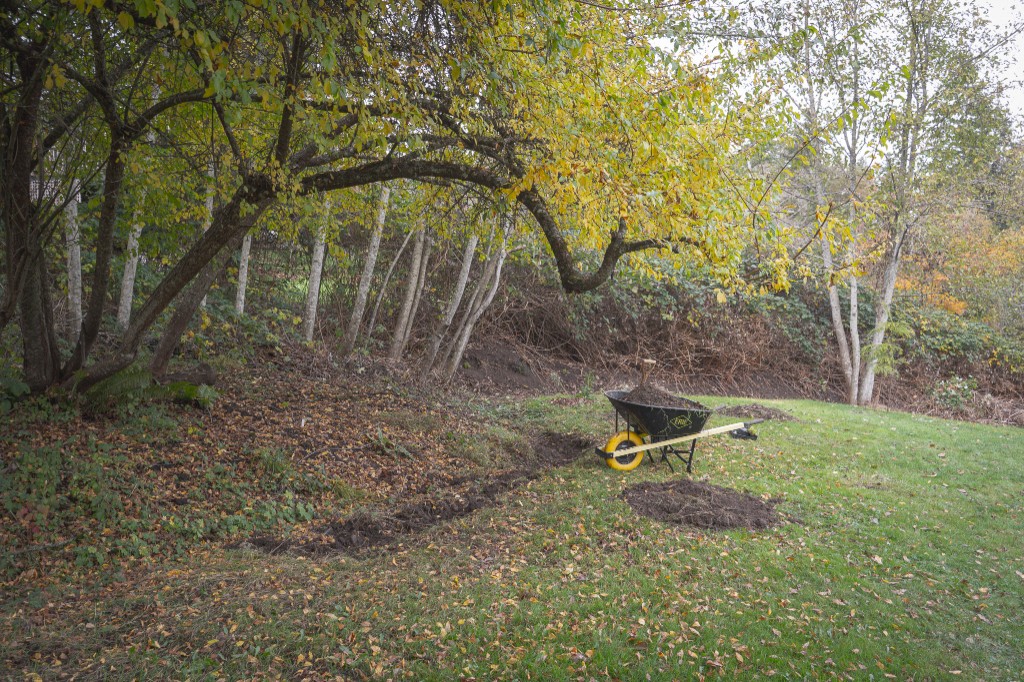
What life is meant to live in those margins, where the water meets the soil? To whom are we denying the right to exist? And why? Because we’re not patient? Because we want things to be easy? Because we want a guarantee of success? Because we reduce “life” to those discrete things that we can see in a pond? Is the presence of a water lily, some tall grasses, and a frog enough “life” for us?
I’d like to dig a pond. I’d like to do it with a shovel. I’d like to try to get it to hold water the real way. Even though it might not work. Even though it will take a while.
It’s okay. Something will work. It just might not be the thing I set out to do.